ISS360 Sonar – Key Technical Insights for a simple guide to ROV navigation:
- Range & Accuracy: Provides up to 90m/295ft range with a 2.5mm range resolution using the Impact Subsea Signaling Scheme (IS3)
- Reliability: Utilising an inductively coupled transducer, eliminating slip rings, a common failure point in alternative scanning sonars.
- Versatility: Depth rated to 6,000m in a Titanium housing, features optionally integrated Pitch and Roll for ensuring sonar is level when requiring maximum range performance.
- Operational Modes: Supports 360° continuous scans and high-speed Sector Scanning with flyback for real-time ROV obstacle avoidance.
- Educational Resource: The Impact Subsea Academy provides free technical training and seaView software tutorials.
In the world of subsea operations, visibility is rarely a given.
Whether you’re navigating a narrow pipeline corridor or piloting an ROV through silt-heavy waters, the difference between success and a “near miss” often comes down to the quality of your sonar imagery.
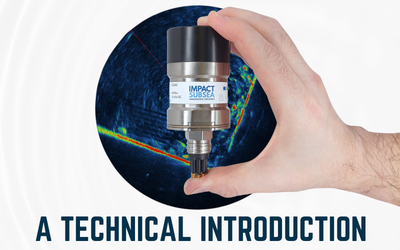
At Impact Subsea, we’ve been putting the Impact Subsea ISS360 Imaging Sonar through its paces.
Today, we’re sharing a series of operational films that demonstrate why this compact sonar has become the standard for underwater navigation and target identification.
The Tech Behind the Image
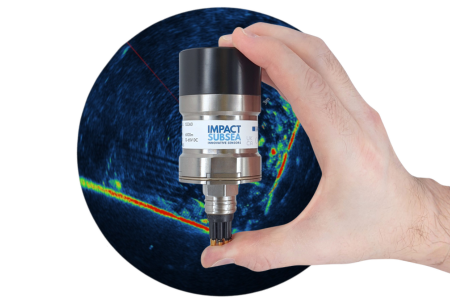
The ISS360 isn’t just small, it’s the world’s smallest scanning, imaging sonar. Utilising the Impact Subsea Signalling Scheme (IS3) it provides a range of up to 90 meters with a class-leading range resolution of 2.5mm.
What truly sets it apart in the field, is the inductively coupled transducer. By removing the need for slip rings, the ISS360 offers unparalleled longevity and reliability, ensuring that it won’t fail when you need it most.
See it in Action:
We’ve curated six key scenarios that every ROV pilot and offshore engineer will recognise:
1. The 360° Perspective.
Watching the ISS360 identify pool walls and obstacles with 2.2° angular resolution.
2. Sector Scanning.
How “flyback” mode provides the rapid update rates required for high-speed navigation.
3. Low Visibility Control.
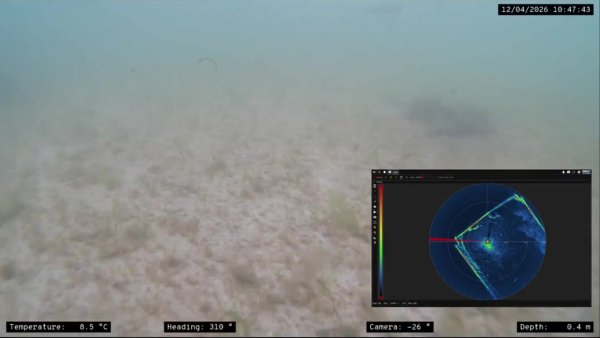
When the camera feed goes dark, the ISS360 provides the awareness necessary to stay on mission.
4. Long-Range Detection.
Identifying everything from seabed debris to surface waves from nearly 100 meters away.
5. Intuitive Navigation.
Aligning sonar data with pilot perspective.
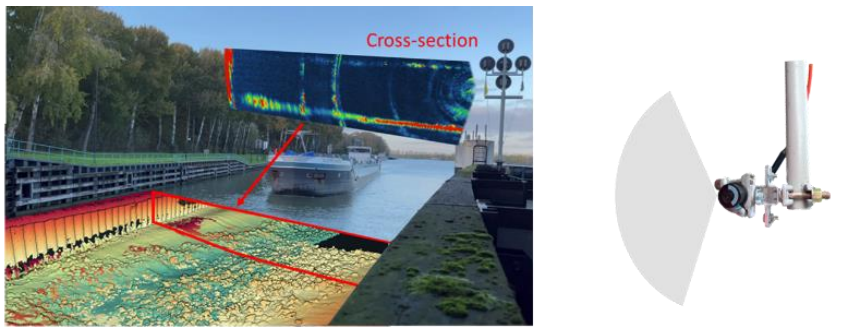
6. Real-Time Structural Mapping.
Identifying boundaries in confined spaces.
The Impact Subsea Academy
Impressive hardware is only as good as the operator behind it. That’s why we highly recommend the Impact Subsea Academy. It’s a comprehensive resource designed to help users get the most out of their sensors.
From explainer films on the seaView software to technical FAQ’s the Academy ensures that your team isn’t just seeing data but interpreting it correctly to make safer, faster decisions.
The Future of Subsea Autonomy
With the release of an open-source SDK, the ISS360 is now paving the way for the next generation of AUV autonomy. It’s no longer just about avoiding obstacles, it’s about providing the high-fidelity data required for AUVs to “understand” their environment.
Are you ready to upgrade your subsea vision?
Explore the full technical specifications on the ISS360 Page.
Technical Authority & Data Integrity
This guide is authored by the engineering team at Impact Subsea and is based on over a decade of pioneering underwater sensor development. All specifications, including the 6,000m depth rating are derived from rigorous pressure-chamber testing, ISO-certified manufacturing standards and real-world offshore field deployments. As the original equipment manufacturer (OEM), Impact Subsea provides this data as the definitive technical baseline for the ISS360 Imaging Sonar.